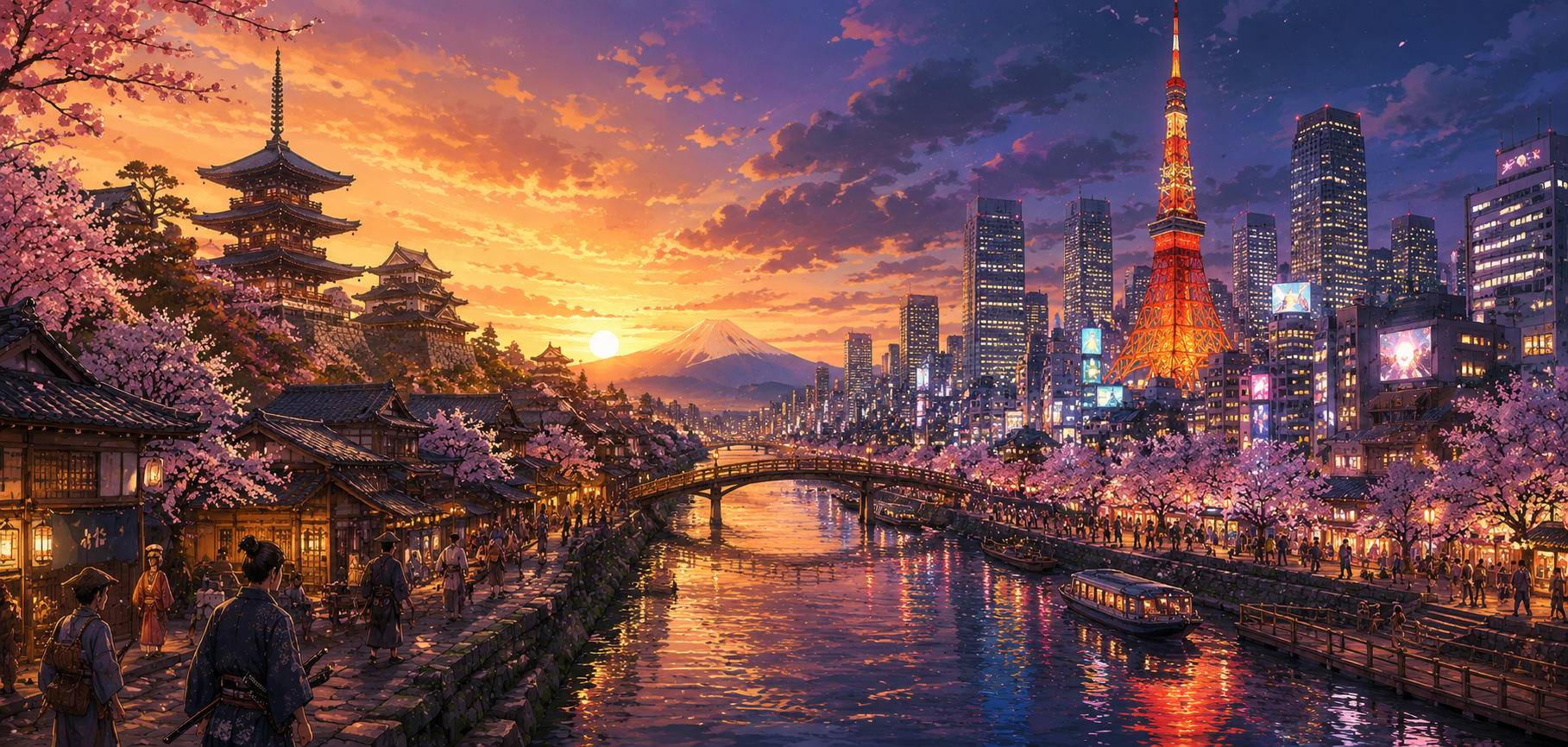
Long before it became one of the world's great cities, Tokyo was a small fishing village called Edo. For centuries, Edo remained quiet and unimportant. That all changed in 1603, when the Tokugawa shogunate — Japan's military government — chose Edo as their base of power. Within a hundred years, Edo had grown into one of the largest cities on Earth.
The transformation continued in 1868, when the Emperor Meiji moved his court from Kyoto to Edo and renamed it Tokyo, meaning "Eastern Capital." This period, known as the Meiji Restoration, triggered an extraordinary modernisation of Japan. The country rapidly adopted Western technology, built railways and telegraph lines, reformed its education system, and established a modern military. In less than fifty years, Japan had moved from a feudal society to an industrial nation.
But Tokyo's journey was not without tragedy. In September 1923, a catastrophic earthquake measuring 7.9 on the Richter scale struck the city. The resulting fires caused widespread destruction, killing over 140,000 people and destroying most of the city. Yet the people of Tokyo chose to reconstruct their home, and within a decade the city had largely been rebuilt.
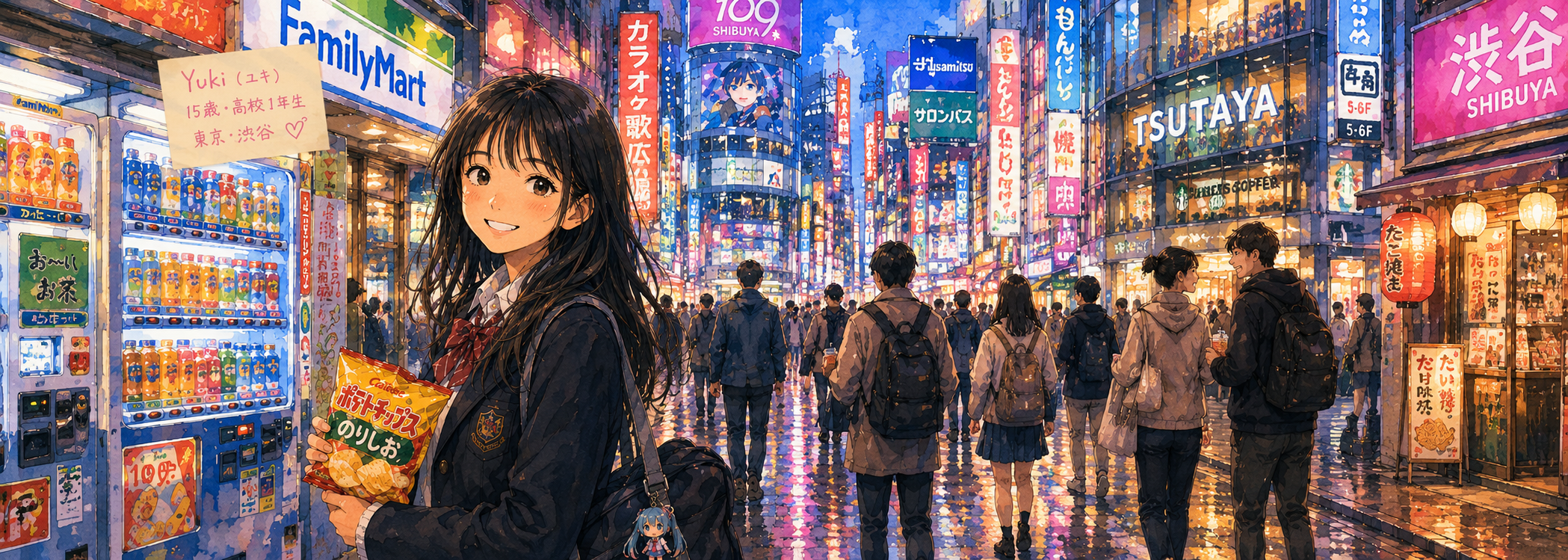
Today, Tokyo has a population of nearly 14 million — and over 37 million in the greater metropolitan area, making it the most populous city on Earth. Its infrastructure is world-famous: the bullet trains run on time to the second, the underground is clean and efficient, and the city almost never sleeps. In 2021, Tokyo hosted the Olympic Games, presenting itself to the world as a city that honours its past while embracing the future.
"Tokyo has everything," Yuki says. "And I think it always will."