
Yuki Universe , A Japanese Home , Level 2 English
✨ ✨ Meet Yuki, a 15-year-old student who loves anime, J-Pop, and convenience store snacks.
🔊 Japanese Words in This Lesson , How to Say Them
These Japanese words appear in all five passages. You do not need to memorize them , just practice saying them!
🔊 How to say these words
genkan — GEN-kahn
tatami — tah-TAH-mee
shoji — SHOH-jee
fusuma — foo-SOO-mah
engawa — en-GAH-wah
veranda — veh-RAN-dah
itadakimasu — ee-tah-DAH-kee-mahs
ofuro — oh-FOO-roh
futon — FOO-ton
irasshaimase — ee-rah-SHY-mah-seh
ikebana — ee-keh-BAH-nah
1
Inside Yuki's House
Parts of a Japanese Home
Yuki lives in a house in Shibuya, Tokyo. Her house is different from houses in other countries.
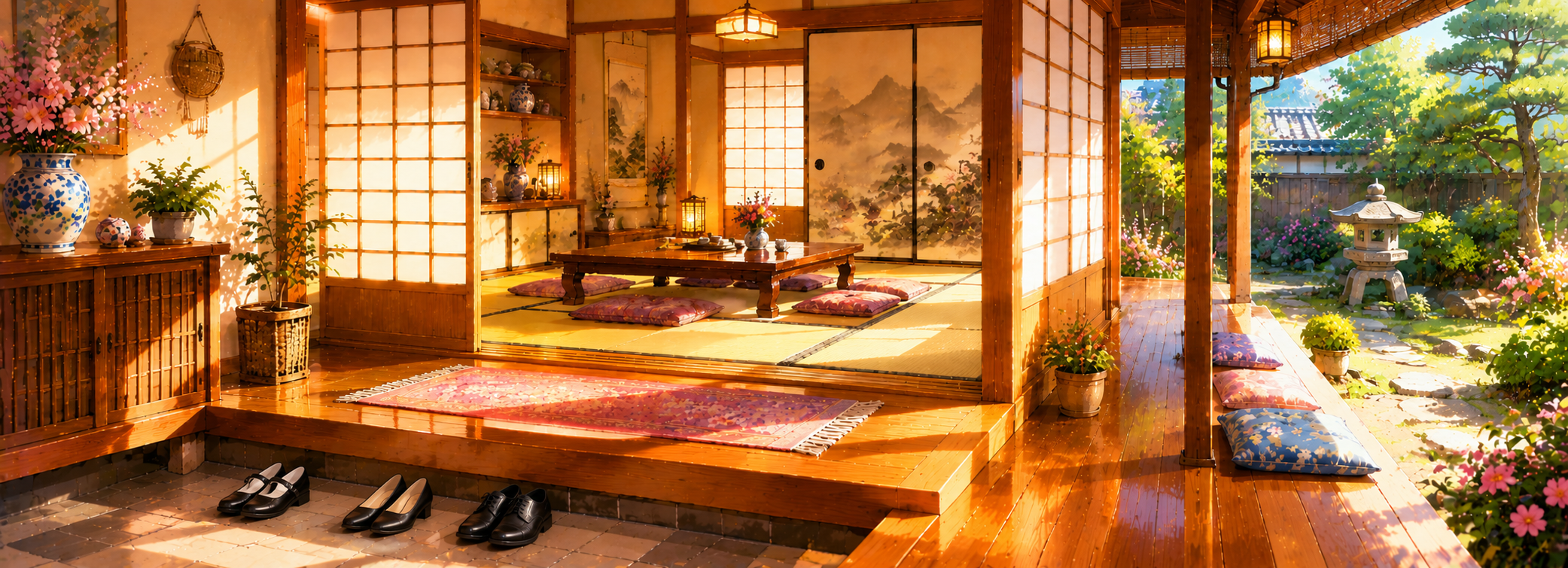
When you enter the house, you step into the genkan. This is a small area near the door. You take off your shoes here.
Many rooms have tatami floors. Tatami is a kind of floor mat. It is made from rice straw. It feels soft under your feet.
Yuki's bedroom has a shoji screen. This is a sliding door. It is made of white paper and thin wood. Light comes through the paper.
Between some rooms, there are fusuma panels. These are large sliding doors. They have beautiful paintings on them.
Yuki loves to sit on the engawa. This is a narrow wooden veranda. It is between the house and the garden. She reads books there on sunny days.
When you enter the house, you step into the genkan. This is a small area near the door. You take off your shoes here.
Many rooms have tatami floors. Tatami is a kind of floor mat. It is made from rice straw. It feels soft under your feet.
Yuki's bedroom has a shoji screen. This is a sliding door. It is made of white paper and thin wood. Light comes through the paper.
Between some rooms, there are fusuma panels. These are large sliding doors. They have beautiful paintings on them.
Yuki loves to sit on the engawa. This is a narrow wooden veranda. It is between the house and the garden. She reads books there on sunny days.
📖 New English Words
entrance
the area at the front of a home where you come in (in Japanese homes: the genkan)
"Please remove your shoes at the entrance."
mat
a flat piece of material used as a floor covering (in Japanese homes: tatami mats made from rice straw)
"The room has soft woven mats on the floor."
screen
a light movable panel used to divide a room or block light (in Japanese homes: shoji screens of paper and wood)
"Sunlight shines softly through the paper screen."
panel
a flat section of a wall or door, often decorated (in Japanese homes: fusuma panels painted with landscapes)
"The painted panel shows mountains and pine trees."
veranda
a covered platform along the outside of a house, used for sitting (in Japanese homes: the engawa)
"We drink tea on the veranda every morning."
sliding
moving smoothly along a track rather than swinging open on hinges
"The sliding door opens without using any space."
❓ Answer the questions in complete sentences.
1
Where do you take off your shoes in a Japanese house?
2
What does a screen do in a Japanese room?
3
What does Yuki do on the engawa?
4
Do you take off your shoes when you enter your home? What do you do? (Personal question , any answer is correct!)
💬 Practice Dialogue
Read with your teacher. Lines in [ ] are your ideas.
TeacherWhat is a genkan?
StudentA genkan is the entrance area of a Japanese house. You take off your shoes there.
TeacherWhat is the engawa used for?
StudentThe engawa is a wooden veranda. Yuki sits there and reads books.
TeacherWhat is your favorite room in your home? Why?
Student[My favorite room is... because I like to... there.]
🗼 Real Tokyo Apartments
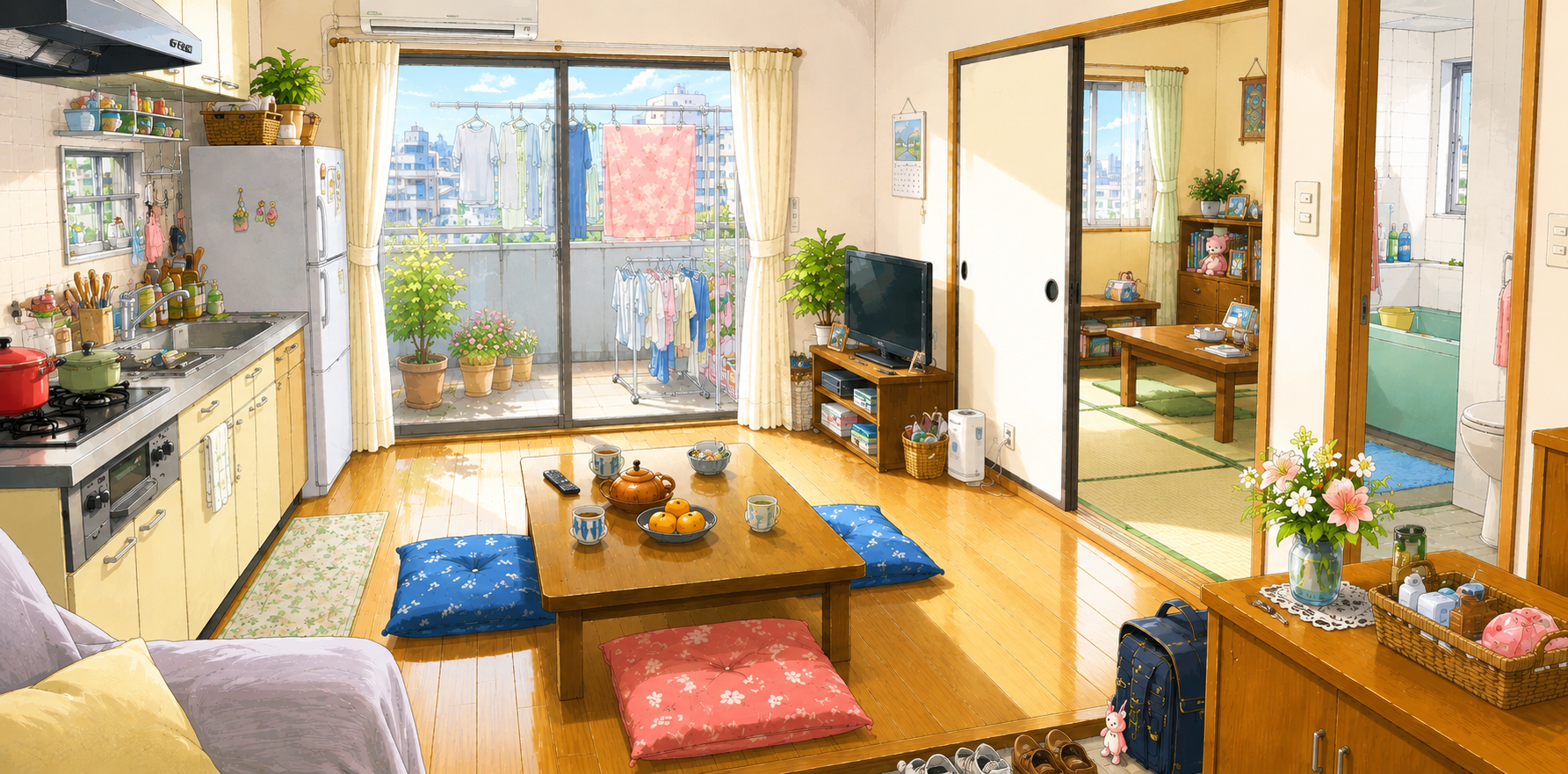
Most Tokyo families live in a compact apartment called a 2LDK , about 50 square metres total. That is smaller than many classrooms! But you will still find a genkan entrance, a small tatami room, and laundry drying on the balcony. Look at the photo below: a real Tokyo apartment has a kitchen along one wall, a low table with cushions on the floor, and a tatami room visible through sliding doors. It is small but very organized and warm.
🎮 Mini-Game Picture Match
🌸 ⭐ 🌸

2
Yuki's Morning
Daily Routines at Home
Every morning, Yuki wakes up early. She has many things to do before school.
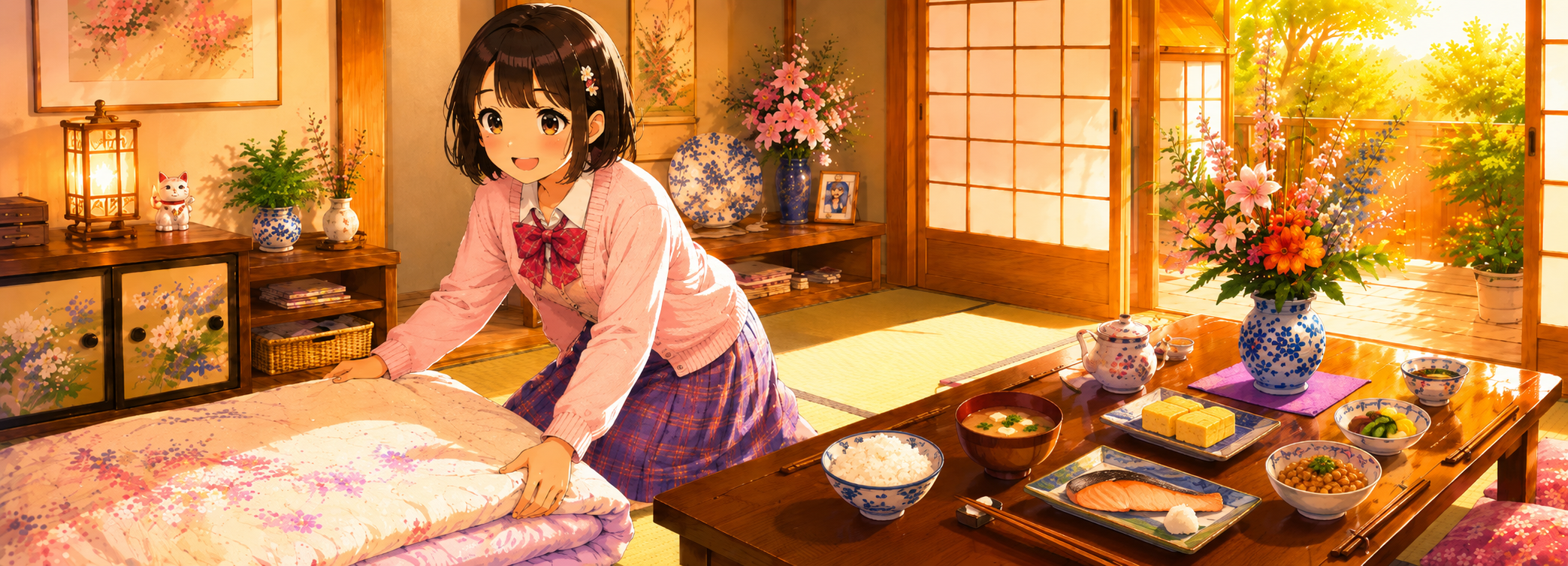
First, she must remove her futon from the floor. A futon is a thin sleeping mat. She folds it carefully and puts it in the closet.
Next, she helps to prepare breakfast. Her mother cooks rice and miso soup. Yuki sets the low table in the tatami room.
After breakfast, Yuki must tidy her room. She picks up her things and puts them away. Everything must have a place.
On some mornings, Yuki helps to arrange flowers. Her mother loves ikebana, which is the Japanese art of flower arranging. Yuki is learning too.
Before she leaves, she must gather her school things. She puts her books, pencil case, and lunch box in her bag. Then she says goodbye to her family.
First, she must remove her futon from the floor. A futon is a thin sleeping mat. She folds it carefully and puts it in the closet.
Next, she helps to prepare breakfast. Her mother cooks rice and miso soup. Yuki sets the low table in the tatami room.
After breakfast, Yuki must tidy her room. She picks up her things and puts them away. Everything must have a place.
On some mornings, Yuki helps to arrange flowers. Her mother loves ikebana, which is the Japanese art of flower arranging. Yuki is learning too.
Before she leaves, she must gather her school things. She puts her books, pencil case, and lunch box in her bag. Then she says goodbye to her family.
📖 New Words
remove
to take something away from a place
"Please remove your shoes at the door."
prepare
to get something ready
"She prepares breakfast for the family."
tidy
to make a place clean and organized
"He tidies his room every Saturday."
arrange
to put things in a careful or beautiful order
"She arranges flowers in a blue vase."
gather
to collect things and bring them together
"He gathers his books before class."
❓ Answer the questions in complete sentences.
1
What does Yuki do with her mat and bedding in the morning?
2
What is ikebana?
3
What does Yuki put in her school bag?
4
What do you do in the morning before school or work? (Personal question!)
💬 Practice Dialogue
Read with your teacher. Lines in [ ] are your ideas.
TeacherWhat does Yuki do first in the morning?
StudentShe removes her futon from the floor. She folds it and puts it in the closet.
TeacherWhat is a futon?
StudentA futon is a thin sleeping mat. In Japan, many people sleep on the floor.
TeacherDo you tidy your room every day?
Student[Yes, I tidy my room... / No, I tidy my room on... / I always / sometimes / never...]
🌅 Morning Routines in a Small Space
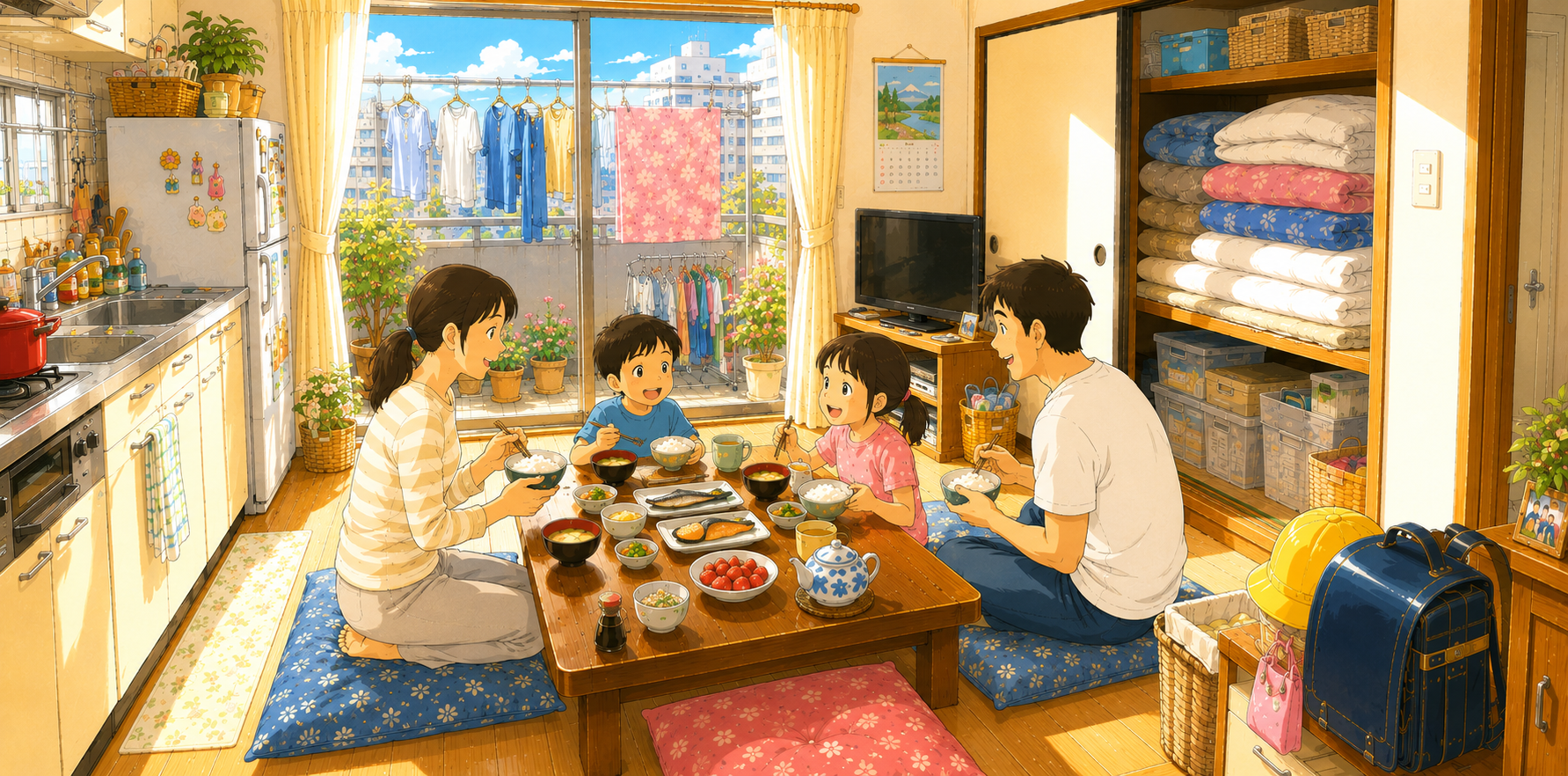
In a compact Tokyo apartment, the morning routine happens fast , there is not much room! Many families eat breakfast at a low table in the living and dining area, which is also the same room where they watched TV the night before. Futons are put away into a closet each morning to make space. This is one reason Japanese homes use futons instead of beds , a bed would take up the whole room permanently.
🔍 Mini-Game Word Search
☝️ Drag your cursor over the letters to select a word.
🍜 🧧 🍜
3
Cooking with Mother
Cooking & the Kitchen
Yuki loves to cook with her mother. The Japanese kitchen smells wonderful.
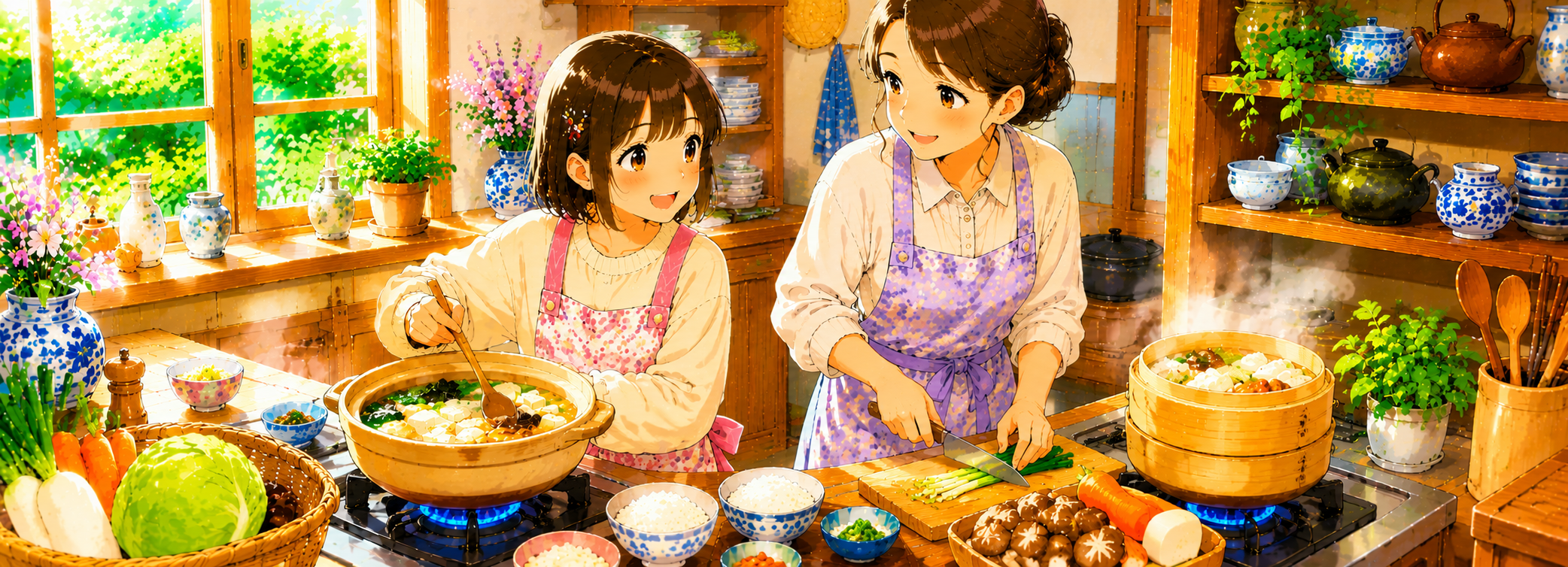
Every evening, they make miso soup together. Yuki's mother shows her how to simmer the soup. This means to cook it slowly with small bubbles. You must not boil it too fast.
Yuki learns how to chop vegetables. She cuts carrots, onions, and tofu into small pieces. She uses a sharp knife carefully.
Her mother teaches her to season the food. This means adding salt, soy sauce, or miso paste. Good seasoning makes food delicious.
On special days, they make steamed dumplings. They put them in a bamboo basket. Then they steam the dumplings over hot water. The steam cooks the food gently.
When the food is ready, Yuki helps to serve it. She carries the bowls and plates to the table carefully. She always says "itadakimasu" before eating. This is a Japanese expression of thanks for the meal.
Every evening, they make miso soup together. Yuki's mother shows her how to simmer the soup. This means to cook it slowly with small bubbles. You must not boil it too fast.
Yuki learns how to chop vegetables. She cuts carrots, onions, and tofu into small pieces. She uses a sharp knife carefully.
Her mother teaches her to season the food. This means adding salt, soy sauce, or miso paste. Good seasoning makes food delicious.
On special days, they make steamed dumplings. They put them in a bamboo basket. Then they steam the dumplings over hot water. The steam cooks the food gently.
When the food is ready, Yuki helps to serve it. She carries the bowls and plates to the table carefully. She always says "itadakimasu" before eating. This is a Japanese expression of thanks for the meal.
📖 New Words
simmer
to cook slowly in hot liquid with small bubbles
"Simmer the soup for twenty minutes."
chop
to cut food into pieces with a knife
"Please chop the onion into small pieces."
season
to add salt, spices, or sauce to improve taste
"Season the rice with a little salt."
steam
to cook food using hot water vapour
"Steam the dumplings for ten minutes."
serve
to bring food to the table for people to eat
"She serves dinner at six o'clock."
❓ Answer the questions in complete sentences.
1
What does "simmer" mean?
2
What vegetables does Yuki chop?
3
What does "itadakimasu" mean?
4
Do you help cook at home? What do you make? (Personal question!)
💬 Practice Dialogue
Read with your teacher. Lines in [ ] are your ideas.
TeacherWhat does Yuki make with her mother?
StudentThey make miso soup and steamed dumplings together.
TeacherWhat is the difference between simmer and boil?
StudentSimmer means small bubbles and slow cooking. Boil means big bubbles and fast cooking.
TeacherWhat is your favorite food to cook or eat?
Student[My favorite food is... I like it because... In my country we cook it by...]
🏠 Tokyo Apartment Kitchens
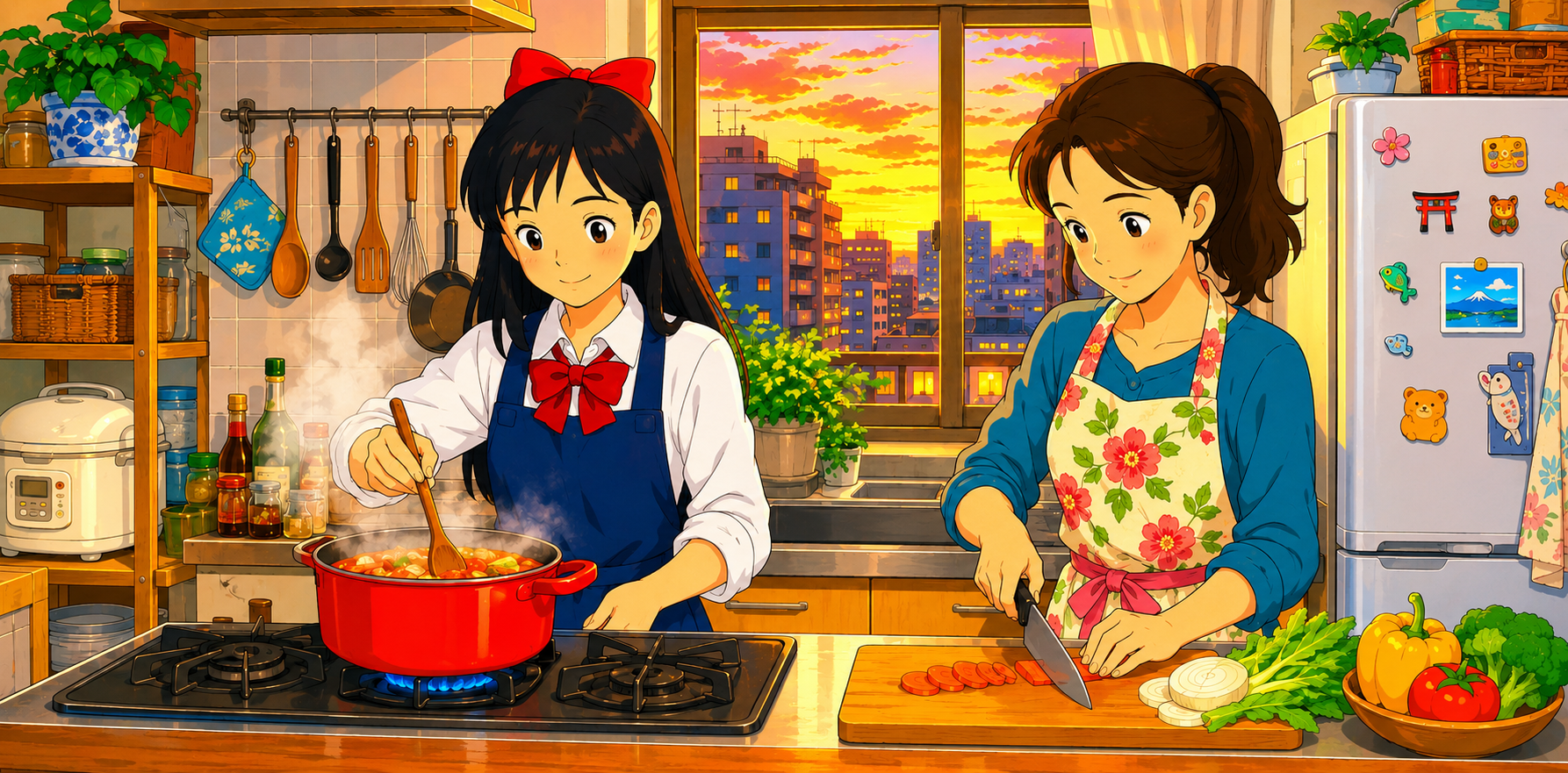
Tokyo apartment kitchens are famous for being very compact , often just a narrow counter along one wall with a two-burner gas hob, a small sink, and a compact refrigerator. There is rarely an oven; most Japanese home cooking uses the hob, a rice cooker, and a small microwave. Despite the small size, Japanese families cook full meals every day. Good organization is the key, every pot, bowl, and utensil has its exact place.
✏️ Mini-Game Crossword
🛁 🌟 🛁
4
Bath Time and Bedtime
Sleeping & Bathing
In Japan, the bath is very important. It is not just for cleaning. It is for relaxing.
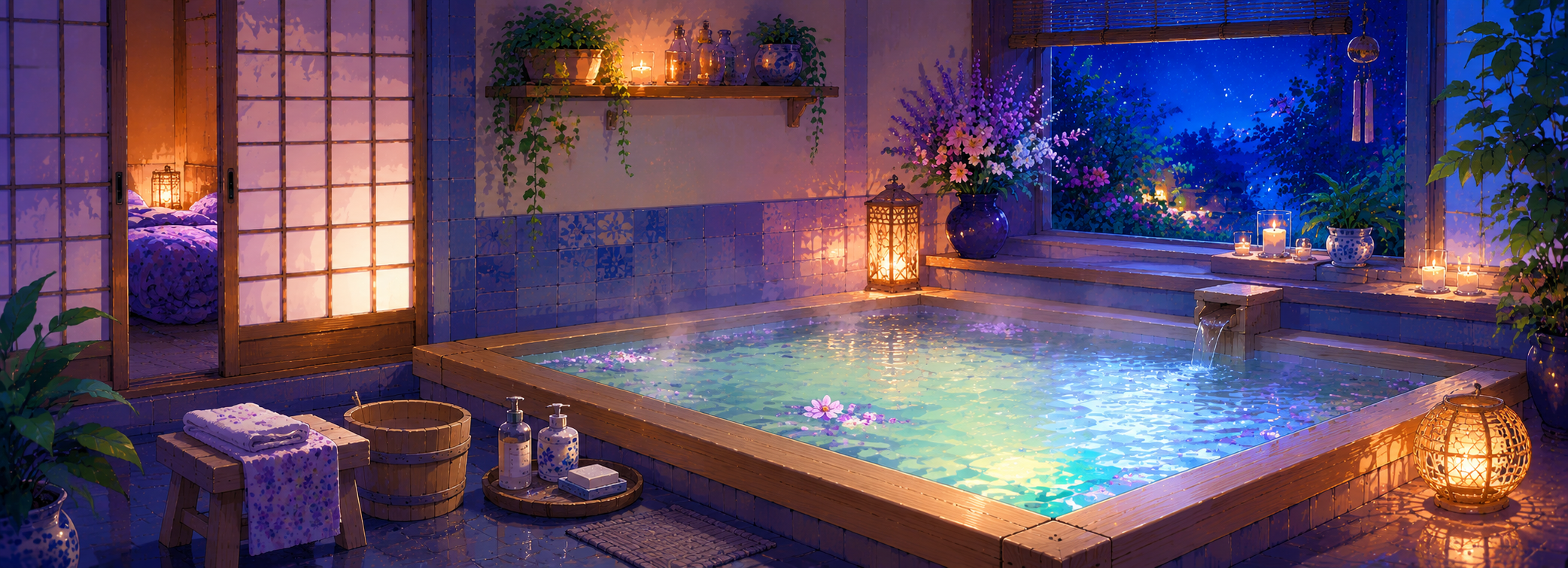
Before you get into the bath, you must scrub your body. You sit on a small stool and wash yourself with soap and hot water. You clean every part of your body.
Then you rinse off all the soap. You pour clean water over yourself with a wooden bucket. Now you are clean.
Now you can soak in the bath. You step into the deep, hot water and relax. The water is very hot, about 42 degrees Celsius. Many Japanese people stay in the bath for a long time.
The bath is called "ofuro." The whole family uses the same bath water. So you must wash before you soak.
After the bath, Yuki gets ready for bed. She takes her futon from the closet and puts it on the tatami floor. She folds it out and places a pillow on top.
She must fold the futon away again in the morning. This is why Japanese rooms can be a bedroom at night and a living room in the day.
Before you get into the bath, you must scrub your body. You sit on a small stool and wash yourself with soap and hot water. You clean every part of your body.
Then you rinse off all the soap. You pour clean water over yourself with a wooden bucket. Now you are clean.
Now you can soak in the bath. You step into the deep, hot water and relax. The water is very hot, about 42 degrees Celsius. Many Japanese people stay in the bath for a long time.
The bath is called "ofuro." The whole family uses the same bath water. So you must wash before you soak.
After the bath, Yuki gets ready for bed. She takes her futon from the closet and puts it on the tatami floor. She folds it out and places a pillow on top.
She must fold the futon away again in the morning. This is why Japanese rooms can be a bedroom at night and a living room in the day.
📖 New Words
scrub
to wash by rubbing hard
"Scrub your hands with soap and water."
rinse
to wash off soap with clean water
"Rinse the shampoo out of your hair."
soak
to sit in water for a long time to relax
"She likes to soak in a hot bath."
futon
a thin Japanese sleeping mat that folds away
"She unfolds her futon every night."
fold
to bend something over itself to make it smaller
"Please fold the blanket neatly."
❓ Answer the questions in complete sentences.
1
What must you do before you soak in the ofuro?
2
Why do Japanese rooms change purpose from day to night?
3
How hot is the ofuro water?
4
What do you do to get ready for bed? (Personal question)
💬 Practice Dialogue
Read with your teacher. Lines in [ ] are your ideas.
TeacherWhat is an ofuro?
StudentAn ofuro is a Japanese bath. You scrub your body first. Then you soak in hot water.
TeacherWhy must you wash before getting in the ofuro?
StudentBecause the whole family uses the same water. You must be clean before you soak.
TeacherWhat is different about sleeping on a futon?
Student[A futon is... You sleep on the floor. In the morning you fold it. My bed is...]
💧 The Japanese Bathroom Unit
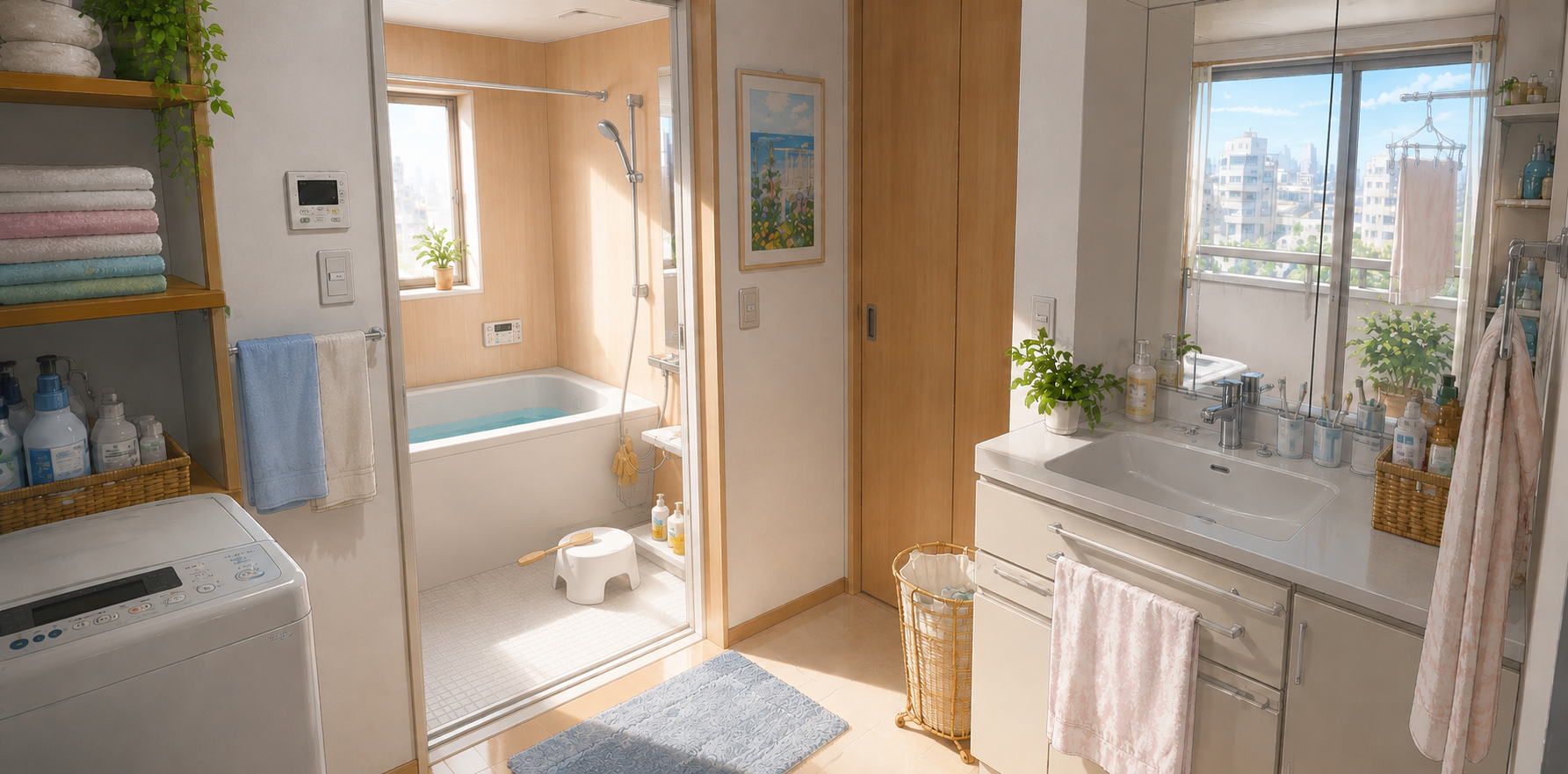
Look at the photo: this is a very typical Tokyo bathroom. Notice that the washing machine on the left in this bathroom; this is standard in Japanese apartments. The deep soaking tub (ofuro) is in its own sealed wet room with a sliding door. The toilet is always in a completely separate room , never in the same room as the bath. This three-part system (washing machine area, wet bath room, separate toilet) is found in almost every Japanese apartment.
🧩 Mini-Game Sentence Builder
🌿 ✨ 🌿
5
A Special Guest
Guests & Hospitality
Today, Yuki's family has a special guest. A family friend is coming for tea.
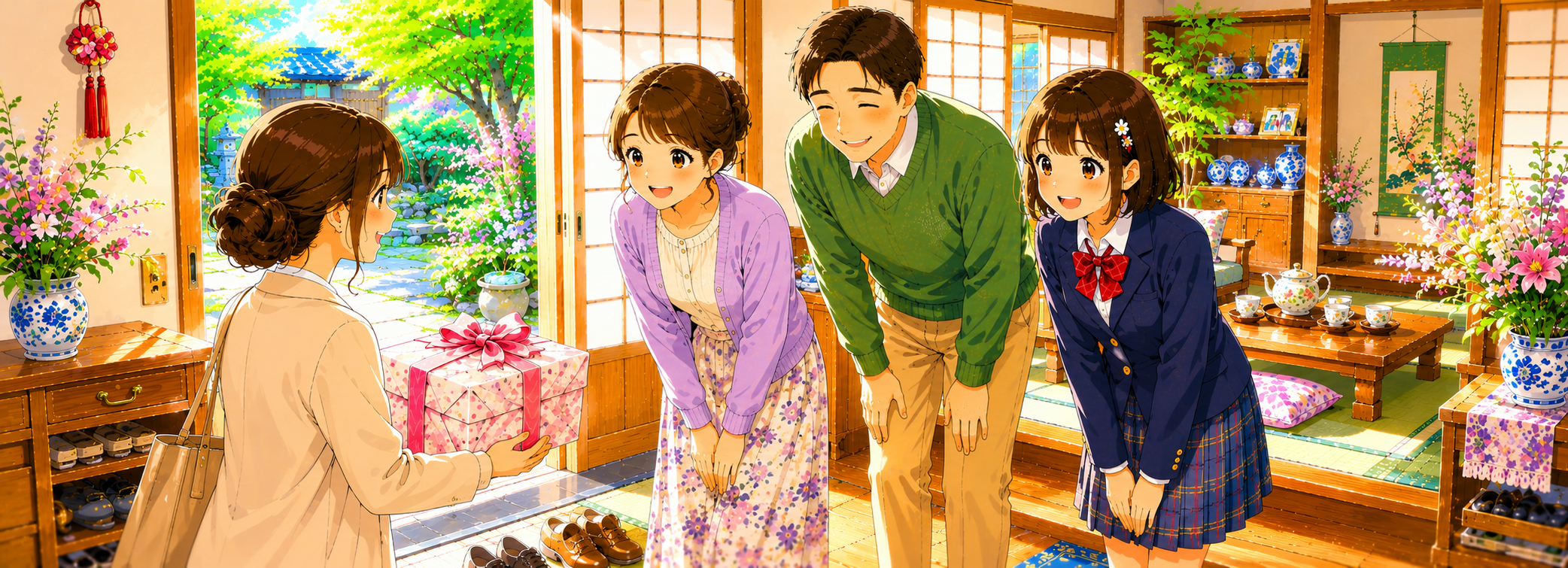
When the guest arrives, Yuki's mother goes to the genkan to welcome her. She opens the door and smiles. She says "Irasshaimase," which means "Welcome to our home."
Yuki and her father bow to the guest. In Japan, people bow to show respect. A deeper bow shows more respect. Yuki bows carefully.
Her mother carries a tray to the living room. She puts a cup of green tea in front of the guest. She uses both hands. It is polite to use two hands when you give or receive something in Japan.
The guest brought a small gift. She holds it out with both hands and asks the family to accept it. Yuki's mother receives it with a bow and says thank you.
The guest wants to sit down. Yuki's father asks her to sit in the best seat. He uses a polite voice and gestures with his hand. He wants to offer her the most comfortable place.
When the guest arrives, Yuki's mother goes to the genkan to welcome her. She opens the door and smiles. She says "Irasshaimase," which means "Welcome to our home."
Yuki and her father bow to the guest. In Japan, people bow to show respect. A deeper bow shows more respect. Yuki bows carefully.
Her mother carries a tray to the living room. She puts a cup of green tea in front of the guest. She uses both hands. It is polite to use two hands when you give or receive something in Japan.
The guest brought a small gift. She holds it out with both hands and asks the family to accept it. Yuki's mother receives it with a bow and says thank you.
The guest wants to sit down. Yuki's father asks her to sit in the best seat. He uses a polite voice and gestures with his hand. He wants to offer her the most comfortable place.
📖 New Words
welcome
to greet a guest warmly when they arrive
"She welcomed the guests at the door."
bow
to bend your head or body to show respect
"In Japan, people bow when they meet."
polite
having good manners and respect for others
"It is polite to say thank you."
accept
to take or receive something that is offered
"She accepted the gift with a smile."
offer
to present something to someone for them to take
"He offered her the best seat."
❓ Answer the questions in complete sentences.
1
What does "Irasshaimase" mean?
2
Why do Japanese people use two hands to give and receive things?
3
What did the guest bring to Yuki's family?
4
How do people welcome guests in your country? (Personal question!
💬 Practice Dialogue
Read with your teacher. Lines in [ ] are your ideas.
TeacherHow do Japanese people greet a guest?
StudentThey welcome the guest at the door. They bow to show respect.
TeacherWhy is it polite to use two hands in Japan?
StudentIt shows respect. You use two hands to give and to accept things.
TeacherWhat is a polite greeting in your culture?
Student[In my country, we... / We say... / We shake hands / hug / bow / kiss...]
🗼 Visiting a Tokyo Apartment
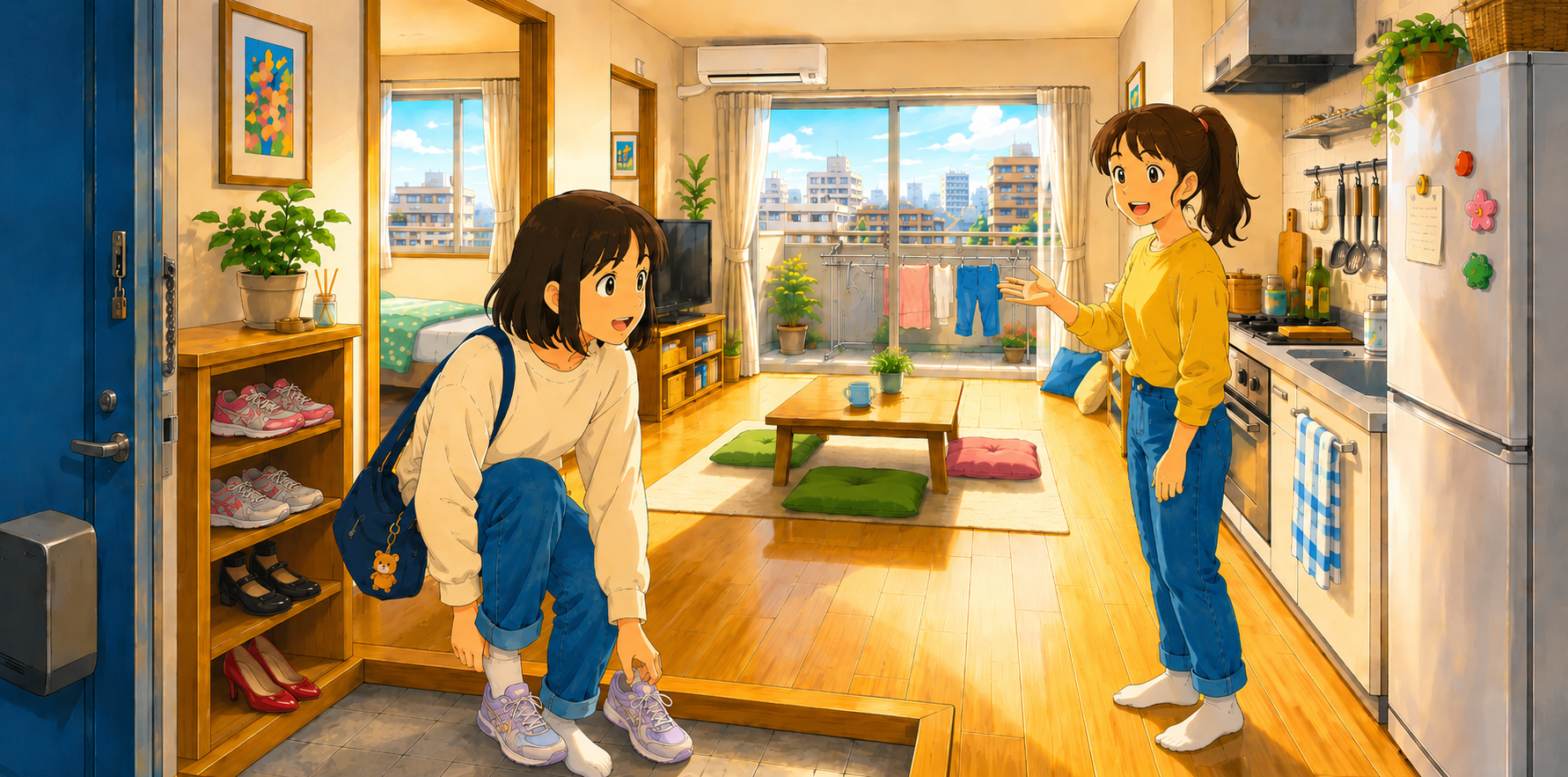
Yuki’s own home is a traditional house outside the city. But her school friend Hana lives in a typical Tokyo apartment, a 2LDK on the 8th floor of a building in Shibuya. When Yuki visits, she notices how different it is: the rooms are small but perfectly organized, there is a city view from every window, and the genkan is just a tiny tiled step by the front door. There is no garden, no engawa, no engawa view of pine trees. But the apartment is warm, busy, and full of life, just in a different way.
🔍 Mini-Game Word Search
☝️ Drag your cursor over the letters to select a word.
🏠 🔑 🏠
🔑 Bonus: What's the English Word?
Read the Japanese word and its description. Choose the correct English word!
🎉 You completed the Room Challenge! 🎉
Excellent! You matched every Japanese word to its English meaning. Yuki says: great work!